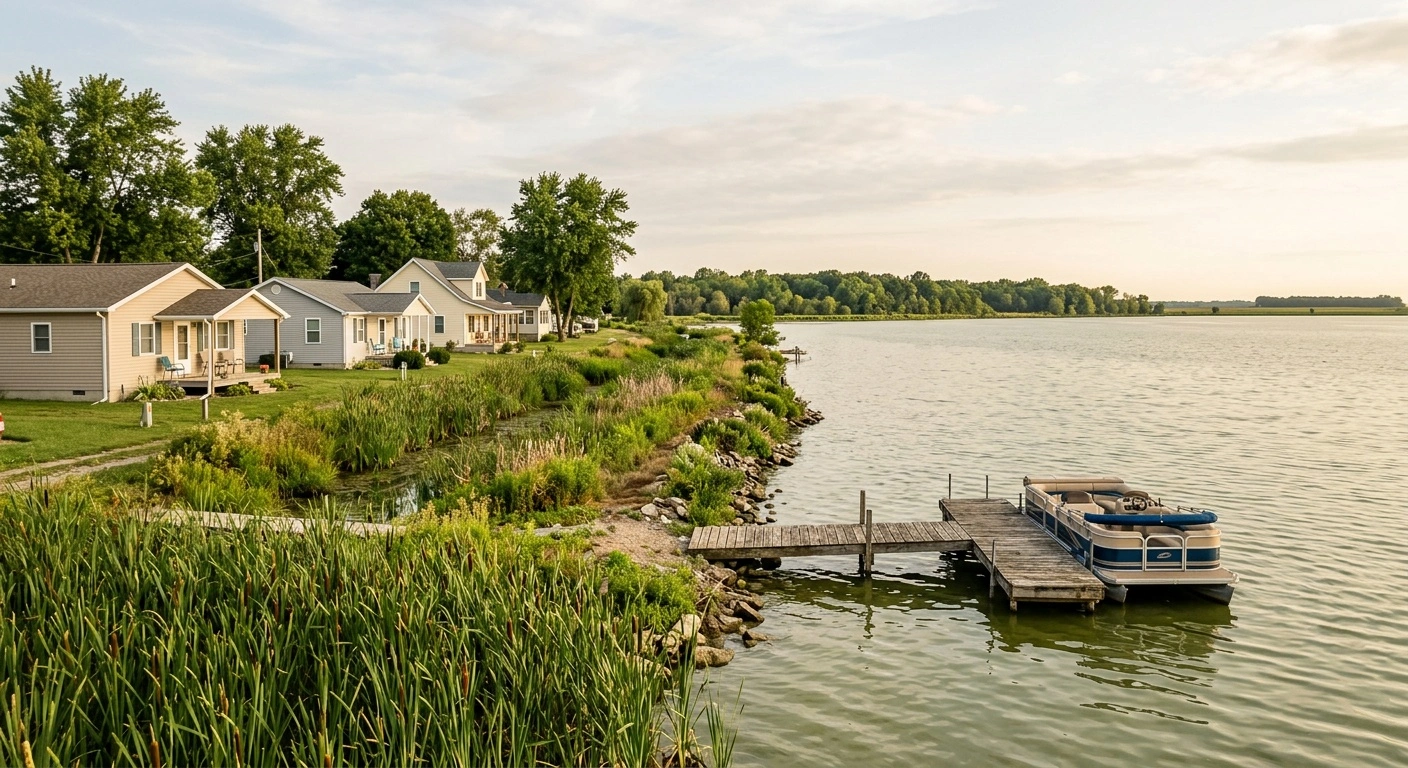
Buckeye Lake development plans combine local zoning decisions, public infrastructure projects, private proposals and state conservation duties. The central challenge is clear. Communities must add homes, services and public access without worsening runoff, crowding boat ramps or erasing the lake’s working character.
Buckeye Lake crosses Licking, Fairfield and Perry counties. It also borders several villages and unincorporated areas. As a result, a project near Millersport may face a different review process than one in Buckeye Lake, Thornville or Fairfield Beach.
The Ohio Department of Natural Resources also plays a major role. ODNR manages the water and much of the public shoreline through Buckeye Lake State Park. Anyone tracking the lake’s future should expect overlapping plans, agencies and approval processes.
What Buckeye Lake development plans cover
Most development discussions involve housing, roads, utilities, commercial services, shoreline access, boating facilities and environmental protection. Housing proposals often attract the most attention. However, the supporting infrastructure can have a greater long-term effect.
More homes can increase traffic on narrow roads and strain sewer or water systems. They can also send more stormwater toward a shallow reservoir. Reviewers should examine those effects before approving a project.
Commercial growth creates similar tradeoffs. Residents and visitors need restaurants, stores and everyday services. Yet large sites can add pavement, lighting and traffic near established neighborhoods.
Officials must determine whether construction fits current zoning or needs a rezoning, variance or separate permit. Each process answers a different question. Approval at one stage does not settle every engineering, environmental or access issue.
Because no single lakewide plan controls every parcel, public participation matters. Residents should read meeting agendas, staff reports, site plans and proposed approval conditions. Social media summaries often leave out revisions or technical details.
Concept drawings can change before construction, and some proposals never move past an early presentation. The current public record provides the most reliable information. Check the records maintained by the jurisdiction reviewing the project.
How the dam project changed the lake’s future
No discussion of Buckeye Lake’s future makes sense without considering the dam. In 2015, engineers identified the old earthen dam as a severe safety risk. The state then kept the lake at a low level while crews built a replacement.
The restrictions disrupted normal lake use for several years. Shoreline property owners, boaters and businesses all felt the effects. Many local businesses depend heavily on summer visitors.
Crews completed the replacement dam, and normal lake levels returned. The conversation then shifted from immediate safety and economic survival to long-term growth, access and infrastructure. The experience showed how strongly the local economy depends on a functioning public lake.
That history does not justify every waterfront proposal. Instead, it shows how one public infrastructure decision can affect every shoreline community. Local governments may have different zoning rules, but they share the consequences of major lake projects.
Reviewers should consider pedestrian access, traffic, maintenance and nearby homes when evaluating future shoreline work. Residents should also separate state park maintenance from private development. Those projects use different budgets and follow different approval processes.
Why water quality belongs in every growth decision
Buckeye Lake is a shallow, man-made reservoir covering roughly 3,100 acres. It has about 35 miles of shoreline. Its green or green-brown water often contains suspended sediment, but natural turbidity does not eliminate water-quality concerns.
Shallow lakes can react quickly to nutrient-rich runoff, disturbed soil and incoming sediment. New roofs, driveways, roads and parking areas prevent water from soaking into the ground. Instead, they direct runoff toward ditches, streams and the lake.
Poorly designed or neglected stormwater systems can carry soil, fertilizer, pet waste and other pollutants. Construction sites need close oversight because exposed ground can release substantial sediment during one heavy Ohio storm.
Harmful algal blooms can occur in Ohio’s inland lakes, including waters used for boating and swimming. Visitors should check current ODNR and Ohio EPA advisories before entering the water. They should also keep children and dogs away when agencies issue contact warnings.
Project reviews must address stormwater after construction, not just temporary erosion fencing. Retention areas, vegetated drainage channels and shoreline buffers can reduce long-term runoff. These features may draw less attention than new buildings, but they directly affect lake health.
Protecting shorelines, wetlands and Cranberry Bog
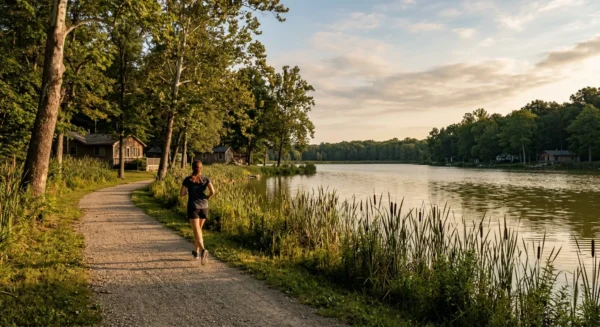
Healthy shoreline edges slow runoff, limit erosion and provide wildlife habitat. Buckeye Lake has hardened residential banks, docks, channels, lawns, public parkland, reeds and wet areas. Each shoreline type handles water and habitat differently.
Conservation does not require communities to convert every developed bank into marsh. It does require planners to recognize the effects of continuous walls and pavement. Planted buffers can absorb runoff and soften wave energy where site conditions allow.
Cranberry Bog State Nature Preserve is the lake’s most unusual natural feature. A floating sphagnum bog island broke free from the lake bottom after workers impounded the reservoir. ODNR describes it as likely the only formation of its kind in the world.
The federal government designated the preserve a National Natural Landmark in 1968. Even so, the bog continues to shrink and remains extremely fragile. Its location within a state park does not make it a public hiking area.
ODNR normally closes the preserve and requires a permit for access. Visitors should never land there independently or step onto it from a boat. Lake planning should protect the bog from wakes, unauthorized entry and other avoidable disturbances.
The bog’s value comes from its rare living ecosystem. Planners should not treat it as another casual visitor attraction.
Balancing public access and private waterfront growth
A central planning issue involves access for people who do not own waterfront property. Buckeye Lake State Park supports public boating and shoreline use. However, facilities and conditions vary around the lake.
Main public launch sites include Liebs Island in Millersport, North Shore in the village of Buckeye Lake and Fairfield Beach. Each ramp serves a different approach. Boaters should choose a launch based on road access and their destination on the water.
Liebs Island serves Millersport and the west side. North Shore works well for visitors arriving through the village and State Route 79. Fairfield Beach provides access from the south side.
Parking and launch lines can tighten on fair-weather summer weekends. Congestion increases when several trailers arrive at once. Conditions on a July Saturday may differ sharply from those shown during a weekday site review.
Reviewers should examine trailer circulation, pedestrian safety and spillover parking near public access points. ODNR awards seasonal docks at Fairfield Beach through a lottery. Waterfront construction does not automatically create more slips for the public.
Usable ramps, adequate parking and accessible shoreline areas keep the lake open to the wider Central Ohio community. Private growth should not reduce those public benefits.
Boating capacity and safety
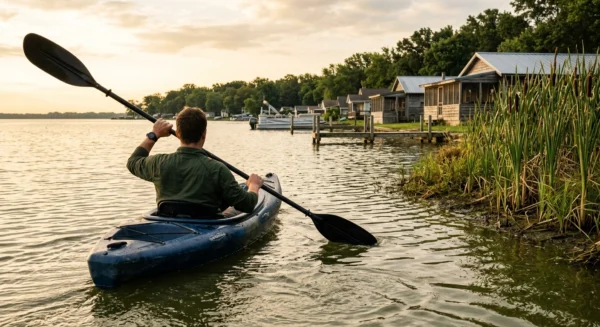
Buckeye Lake has no horsepower limit. Summer traffic includes pontoons, runabouts, bass boats, kayaks and paddleboards. This mix supports recreation but can create conflicts near paddlers, anglers and narrow shoreline channels.
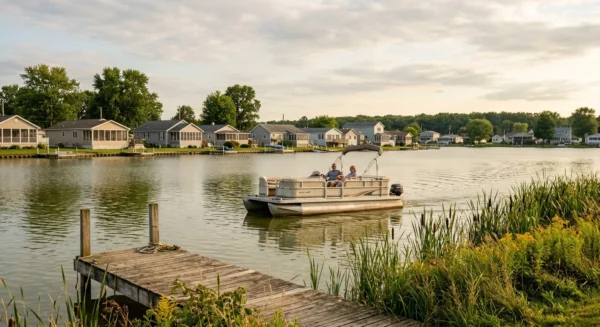
More homes and private docks can increase boat traffic without adding a public ramp. For that reason, marina and dock reviews should address navigation space, wake effects and emergency access. Officials should evaluate actual traffic patterns instead of relying on dock counts alone.
Boat owners must follow Ohio registration, safety-equipment and life-jacket rules. Requirements vary by vessel and operator. Owners should confirm current regulations with the state rather than rely on informal advice at a launch.
The lake’s shallow depth also affects boating conditions. Wind can build short, steep waves across open water. Operators should watch for submerged hazards and changing weather.
Paddlers should start early when possible, remain visible and avoid the busiest open-water periods. Responsible growth can preserve boating safety if planners account for real lake capacity.
Adding housing without treating the lake as a resort
Buckeye Lake is a working Ohio lake community, not an isolated luxury resort. Modest cottages, year-round homes and small village streets shape the area. Boats, trailers and detached garages also remain part of daily life.
New housing can attract residents and support local businesses. However, resort-style projects may conflict with existing infrastructure and neighborhood expectations. Scale, access and operating patterns matter as much as architecture.
Noise presents one practical concern. Boat motors, waterfront activity and summer gatherings come with lake life. Nearby residents still need reasonable access to their homes and streets.
Parking can also create friction in older neighborhoods. Many streets were not designed for several vehicles and boat trailers at each address. New projects should provide enough on-site space instead of shifting demand to neighboring blocks.
Prospective buyers should investigate sewer or septic service, flood requirements and shoreline responsibilities. They should also confirm dock permissions and local zoning. Rules can change from parcel to parcel within the same part of the lake.
Buyers should consult licensed real estate, inspection, legal and financial professionals. A development rendering does not prove what an owner may build or operate. Casual development claims should not drive decisions about property values, taxes or investment returns.
How to review a proposed Buckeye Lake project
To track Buckeye Lake development plans, first identify the government body with authority over the parcel. A village, township, county office or state agency may control the relevant decision. The location and type of approval determine which rules apply.
The phrase “near Buckeye Lake” does not identify the correct jurisdiction. County lines, village boundaries and state property can change the review path. Start with the parcel address and auditor records.
| Question | Record or office to check | What to look for |
|---|---|---|
| What does the applicant propose? | Current planning or zoning agenda and application | Land use, building count, access points and requested approval |
| How will traffic enter? | Site plan and transportation comments | Driveway location, trailer movement, sight distance and road improvements |
| Where will stormwater go? | Engineering or drainage plan | Runoff controls, maintenance responsibility and discharge location |
| Will the project affect the shoreline? | Relevant state and local permit records | Docks, excavation, bank work, habitat disturbance and navigation space |
| When will officials decide? | Official meeting notice and staff report | Hearing date, comment procedures and possible approval conditions |
Meeting packets usually provide more information than short agendas. They may contain maps, staff comments, drainage reports and revised drawings. Review the newest packet because applicants often change plans during the process.
Written approval conditions also matter. Officials may require changes to landscaping, drainage, access or operating practices. If the record remains unclear, ask the reviewing office for the latest submission.
Effective public comments address a specific review standard. Examples include traffic safety, stormwater management, shoreline effects or permitted land use. Broad opposition to all growth gives officials less useful information.
How Buckeye Lake’s history can guide future growth
Christopher Gist recorded the area as the Great Swamp in 1751. Starting in 1826, the state impounded the wetland to feed the Licking Summit of the Ohio and Erie Canal. Recreation gained importance as canal transportation declined.
The state renamed the reservoir Buckeye Lake in 1894. Later, the amusement park era brought crowds and big-band performers, especially during the 1940s and 1950s. Buckeye Lake Amusement Park closed in 1970.
Buckeye Lake became a state park in 1949, the same year Ohio created ODNR. The lake’s role continued to change as year-round communities grew around its shoreline.
This history shows that Buckeye Lake has never remained static. It changed from wetland to canal infrastructure, then became a recreation area and residential community. The dam crisis added another difficult period before normal water levels returned.
Future planning should accept continued change while protecting public access and water quality. It should also preserve the modest scale that separates Buckeye Lake from a manufactured resort.
What responsible progress should deliver
The strongest future for Buckeye Lake lies between unlimited building and a freeze on every project. Growth should match the capacity of roads, utilities and public facilities. Officials should also require enforceable stormwater controls and meaningful public review.
Projects should protect navigation and shoreline function. They should provide enough parking and avoid sending drainage onto neighboring properties. Approval conditions need clear maintenance responsibilities and practical enforcement.
Conservation is basic lake maintenance, not an optional final step. Communities should monitor runoff, protect sensitive areas and preserve public launch capacity. ODNR should continue limiting Cranberry Bog access to permitted visits.
Residents and visitors also need accurate information about current water conditions. Agencies should communicate advisories clearly and respond when testing identifies a health concern.
The best measure of Buckeye Lake development plans is how the area functions on busy weekends and across many seasons. Residents should reach their homes, visitors should launch boats, and new construction should manage its own runoff.
Buckeye Lake has survived major changes in purpose, use and infrastructure. Its next phase can succeed if leaders judge growth by more than the number of buildings. They must also protect what remains public, healthy and recognizably Buckeye Lake.