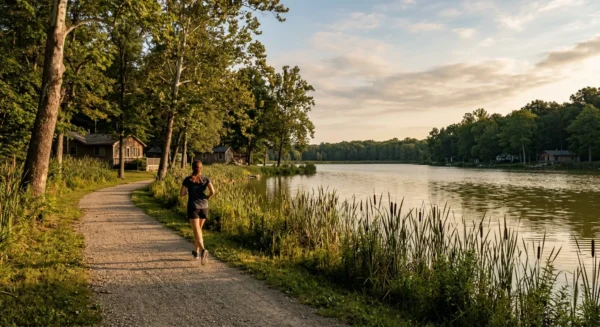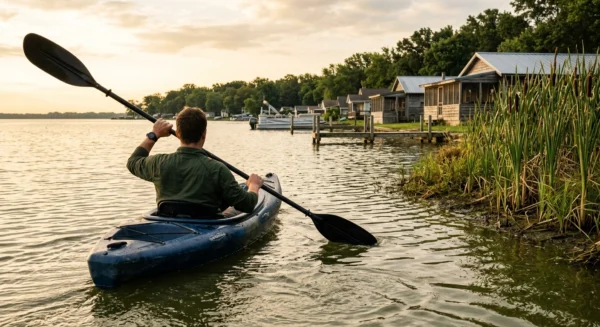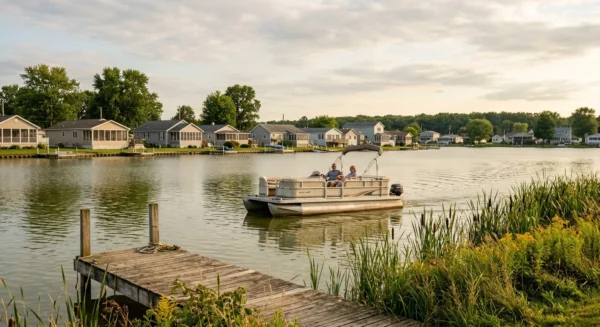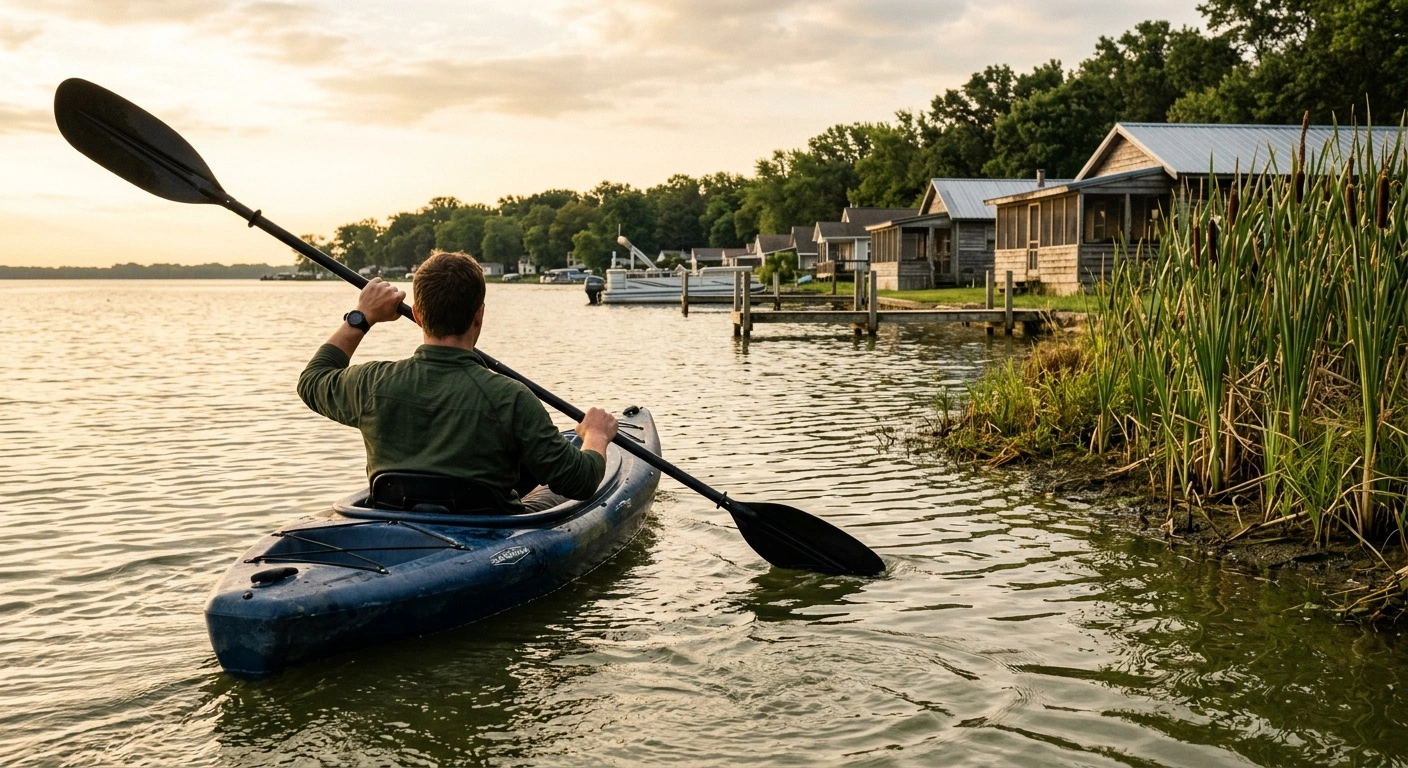
This Buckeye Lake kayaking guide starts with practical advice: launch early, stay near shore, and expect more motorboat traffic by midday. Buckeye Lake covers roughly 3,100 acres and has about 35 miles of shoreline. Its broad, shallow water feels more exposed than a narrow river.
The water often looks green or green-brown. Wind and boat wakes can make it choppy within minutes. Beginners should choose a calm weekday morning, while experienced paddlers can plan longer shoreline routes. Before leaving home, check the weather, lake conditions, and Ohio EPA and ODNR water-quality advisories.
Buckeye Lake Kayaking Guide: What the Water Is Like
Buckeye Lake allows unlimited-horsepower boats. Kayakers share the water with pontoons, bass boats, and runabouts, and the lake has no separate quiet paddling zone. Route choice matters.
Shoreline areas near reeds and docks often provide the most comfortable paddling. Avoid direct routes between busy ramps and popular open-water destinations. Give docks enough room for anglers, swimmers, and boats to maneuver. At the same time, remain close enough to leave the main traffic flow when necessary.
Wind has a strong effect because little terrain blocks it. A mild breeze can make the outbound leg easy and the return tiring. When possible, start by paddling into the wind.
During summer afternoons, wakes can bounce off seawalls and meet at awkward angles. Point the bow toward larger wakes instead of taking them broadside. Secure loose gear inside the kayak.
- Location: Buckeye Lake spans parts of Licking, Fairfield, and Perry counties. It sits roughly 30 miles east of Columbus near I-70 and OH-79.
- Best time: Choose weekday mornings from late spring through early fall, preferably before recreational boat traffic increases.
- Insider tip: Select a launch based on wind direction, not simply on driving distance.
Choosing a Buckeye Lake Kayak Launch
The main public starting points are North Shore, Liebs Island, and Fairfield Beach. Each location has a working boat ramp rather than a dedicated kayak beach. Paddlers must share the ramp with trailers and powered boats.
Prepare the kayak away from the launch lane. Carry it down only when you are ready, then clear the ramp promptly. Public access areas provide parking, but trailer traffic can fill the lots on summer weekends.
Buckeye Lake State Park generally does not charge an entrance fee. However, check current park rules and launch requirements before your trip. Conditions can vary significantly across the lake, so no ramp guarantees calm water.
| Launch | Best for | How to approach | What to watch |
|---|---|---|---|
| North Shore boat ramp | Short trips from the village of Buckeye Lake and access from OH-79 | Take I-70 to OH-79, then follow local signs toward the north shore and state park access | Ramp traffic, open-water wakes, and limited maneuvering room during busy periods |
| Liebs Island boat ramp | Millersport access, kayak fishing, and exploring the southwestern shoreline | Approach through Millersport and follow local roads toward Liebs Island | Boat trailers, crosswinds, and powered boats entering or leaving the ramp |
| Fairfield Beach boat ramp | South-shore paddling and access from Lancaster or Thornville | Use south-side roads toward Fairfield Beach and follow state park signs | Seasonal activity, dock areas, and boat traffic; the park assigns seasonal docks by lottery |
Beginner and Longer Kayaking Routes
Buckeye Lake has no marked kayak trail. Paddlers choose their own distances and turnaround points based on conditions. A phone map helps with navigation, but it cannot replace attention to wind, traffic, and shoreline landmarks.
For a first trip, plan by time rather than mileage. Keep the launch in sight at first, then expand the route as your skills improve. Turn around while the return still feels manageable.
Experienced paddlers can follow the shoreline for a longer out-and-back route. However, beginners should not make an open-water crossing their main objective. A crossing may look short on a map but can expose a kayak to wind and boat traffic.
A Beginner Out-and-Back Route
Launch shortly after sunrise and follow the shoreline instead of paddling toward the middle. Travel away from the ramp for 30 to 45 minutes. This gives you time to feel how the kayak handles small wakes without committing to a long crossing.
Stay outside active dock entrances and give anglers room near reeds, points, and shoreline cover. Stop occasionally to check the wind and identify the launch. Use distinct buildings or shoreline features as reference points.
Turn around before you feel tired, especially if you had a tailwind on the outbound leg. A stable recreational sit-on-top or sit-inside kayak suits this route. Do not tie up at private docks or use private lawns as rest areas.
A Longer Shoreline Paddle
Experienced paddlers can create a half-day route by following one section of shoreline and returning to the same launch. Start into the prevailing wind when possible. Wind can shift, so continue monitoring the forecast and water.
A touring kayak tracks more efficiently than a short recreational boat. However, stability around wakes matters more than speed on Buckeye Lake. Carry enough water for delays and identify places where you can leave the main traffic flow without trespassing.
Do not assume you can find transportation after reaching another public ramp. A one-way trip requires a planned vehicle shuttle. For most visitors, an out-and-back route remains simpler and safer.
Best Times to Kayak Buckeye Lake
Late spring through early fall usually provides comfortable air temperatures and useful daylight. Each season brings different risks. Spring mornings can feel quiet, but cold water increases the danger of an unexpected capsize.
Summer brings warm weather, busy ramps, and frequent wakes. A Saturday afternoon in July can feel far rougher than a Tuesday morning in September. Early fall often has lighter traffic, easier parking, and cool mornings.
Winter paddling requires cold-water clothing, practiced rescue skills, and a clear understanding of hypothermia. Local businesses may also reduce their hours outside summer. Do not rely on nearby food, tours, or other services during the cold season.
| Period | Typical experience | Best approach |
|---|---|---|
| Late spring | Cool water, variable wind, and moderate traffic | Dress for the water temperature and choose a short route |
| Summer weekdays | Warm conditions with manageable morning traffic | Launch early and return before afternoon heat and wakes increase |
| Summer weekends | Busy ramps, frequent wakes, and crowded parking | Launch near sunrise or choose another day |
| Early fall | Quieter water, cooler mornings, and shorter daylight | Carry an extra layer and set a firm turnaround time |
| Cold season | Cold-water hazards and fewer nearby services | Paddle only with proper equipment, rescue training, and cold-water experience |
Kayak, Paddle, and Safety Gear
A stable recreational kayak works for short shoreline trips when it remains in good condition. Entry-level new kayaks often cost a few hundred dollars. Touring and fishing models can cost well over $1,000.
Inspect any used kayak before buying it. Check the hull, drain plug, seat, foot braces, and carry handles. A dependable paddle often costs about $50 to $150, while comfortable paddling life jackets commonly start near $40.
Prices vary with equipment quality and seasonal sales. Budget for transport straps, registration, a whistle, and a dry bag. Use proper cam straps or another rated tie-down system when carrying a kayak on a vehicle.
What Ohio Requires
Ohio treats kayaks as watercraft, and state registration generally applies on public water. Human-powered boats may qualify for an alternative registration. Check current options, fees, and display rules with the Ohio Department of Natural Resources.
Each paddler must have a properly sized, readily accessible life jacket approved by the U.S. Coast Guard. Ohio applies stricter wear rules to young children. Confirm the current age and vessel-length requirements before your trip.
Adults should wear their life jackets throughout the outing. Buckeye Lake wakes can approach from several directions with little warning. Carry a whistle or another legal sound-producing device, and follow current lighting rules near sunrise, sunset, and at night.
Ohio boating laws concerning alcohol also apply to kayakers. Registration terms, fees, and equipment rules can change. Use current ODNR guidance rather than relying on an old online post.
Useful Extras
Pack drinking water, sunscreen, a brimmed hat, and a small first-aid kit. Protect your phone in a waterproof case. Keep dry clothing inside a sealed dry bag during cool weather.
Sit-inside paddlers may also carry a bilge pump and paddle float. Those tools work best after hands-on rescue practice. Kayak anglers should limit cords and leashes because several loose lines can create an entanglement hazard.
Secure tackle boxes, bottles, and electronics rather than leaving them loose in the cockpit. Bright clothing, life jackets, and paddle blades help powerboat operators see a low-profile kayak. Dress for immersion instead of relying only on the air temperature.
Kayak Rentals, Tours, and Reservations
Arrange equipment before arriving if you do not own a kayak. Do not expect a rental stand at every public ramp. Contact 3XP Tours, the approved local recreation operator, about current guided activities and paddling availability.
Offerings, meeting locations, age limits, and operating seasons can change. Ask whether the price includes a kayak, paddle, and life jacket. Also confirm transportation details and the cancellation policy for unsafe wind or water conditions.
Reserve weekend outings ahead during warm weather. Buckeye Lake has only a few local recreation providers rather than a large resort-style rental market. Ask about boat style and weight capacity, especially if you are tall or carrying fishing equipment.
If you rent elsewhere, check whether the agreement allows transport to Buckeye Lake. You will also need a suitable roof rack or trailer. Never improvise a highway tie-down with light cord.
Kayak Fishing at Buckeye Lake
Kayaks offer quiet access to shoreline habitat that may hold crappie, largemouth bass, bluegill, channel catfish, and saugeye. Liebs Island and Fairfield Beach provide practical starting points, depending on wind and parking. Focus on reeds, docks, and changes in shoreline structure.
Avoid drifting through heavily traveled open water when shoreline fishing provides safer access. Stay clear of private docks and never attach a kayak to private property. Leave enough room for dock owners and other anglers.
Most anglers need a current Ohio fishing license. The state offers annual and short-term options through its official licensing system. Check current prices, exemptions, seasons, and fishing rules before launching.
Arrange rods and tackle so they do not block your exit from the kayak. Learn how wind and wakes affect the boat before using an anchor. An anchor trolley can improve control, but anchoring from the side increases capsize risk.
Water Quality, Weather, and Boat-Traffic Safety
Harmful algal blooms can affect Ohio inland lakes, including Buckeye Lake. Shoreline appearance alone cannot confirm safe water. Check current Ohio EPA and ODNR advisories before any trip that may involve water contact.
Avoid surface scum and unusually discolored water. Keep pets from drinking lake water, then wash your hands and equipment after paddling. Clean up before eating or handling food.
Thunderstorms can move quickly across the flat landscape. If you hear thunder, leave the water instead of waiting for visible lightning. Strong wind can also make returning to the original ramp difficult.
Share a basic float plan with someone on shore. Include your launch, travel direction, route, and expected return time. Update that person if your plans change.
Assume powerboat operators have not seen your kayak. Cross active boating routes only when necessary and move predictably. Never stop in front of a ramp entrance, and keep music low enough to hear engines, horns, and weather.
Getting There and Planning Your Day
From Columbus, the drive to Buckeye Lake usually takes 35 to 45 minutes via I-70. OH-79 provides the most direct route to the north shore. From Newark, allow about 25 to 35 minutes.
Lancaster sits roughly 25 to 35 minutes from the southern access areas. Zanesville is commonly 40 to 50 minutes away via I-70. Construction, summer traffic, and full parking lots can add time.
Load and inspect the kayak the night before. This keeps repairs and gear sorting out of the launch area. An early arrival also gives you time to change ramps if wind or parking causes problems.
A Simple Morning Plan
Use this Buckeye Lake kayaking guide with the hourly forecast and current water advisories. Choose North Shore, Liebs Island, or Fairfield Beach based on wind direction. Arrive early enough to unload without blocking the ramp lane.
Paddle along the shoreline for 45 to 90 minutes. Turn around before heat and motorboat traffic increase. Keep your first trip shorter than you think it needs to be.
After loading the kayak, nearby food and drink options include Papa Boo’s, Buckeye Lake Brewery, Blue Heron Buckeye Lake, Horvath’s Harbor, and Barrel Bar. Hours vary by day and season. Confirm kitchen and taproom schedules before planning a stop.
A Quieter Fall Outing
For lighter traffic, choose a weekday morning in September or early October. Launch after the temperature begins to rise. Bring an insulating layer because even a mild breeze can feel cool over the water.
Follow the shoreline instead of making a long crossing. Track the earlier sunset and set a firm return time. Cooler weather often brings more parking space and fewer large wakes.
Millersport provides a practical base for paddlers using Liebs Island. Weldon’s Ice Cream can make a casual seasonal stop when open. Check its hours because lake-area businesses often reduce schedules after summer.
Leave Buckeye Lake Ready for the Next Paddler
Buckeye Lake works best for kayaking when visitors treat it as an active community lake, not secluded wilderness. Launch efficiently and respect private shoreline. Give fishing boats, pontoons, and ramp users enough room to maneuver.
Carry out all trash and fishing line. Clean and dry the kayak before visiting another waterway to reduce the spread of invasive species. Report damaged launch facilities through the appropriate state park channel.
The lake’s history helps explain its broad, shallow character. In 1826, Ohio began impounding the former Great Swamp as a feeder reservoir for the Ohio and Erie Canal’s Licking Summit. The state renamed it Buckeye Lake in 1894, and it became Buckeye Lake State Park in 1949.
This Buckeye Lake kayaking guide favors a calm morning, a shoreline route, and an early return. That approach gives paddlers practical access to a distinctive central Ohio lake while reducing exposure to wind and boat traffic.