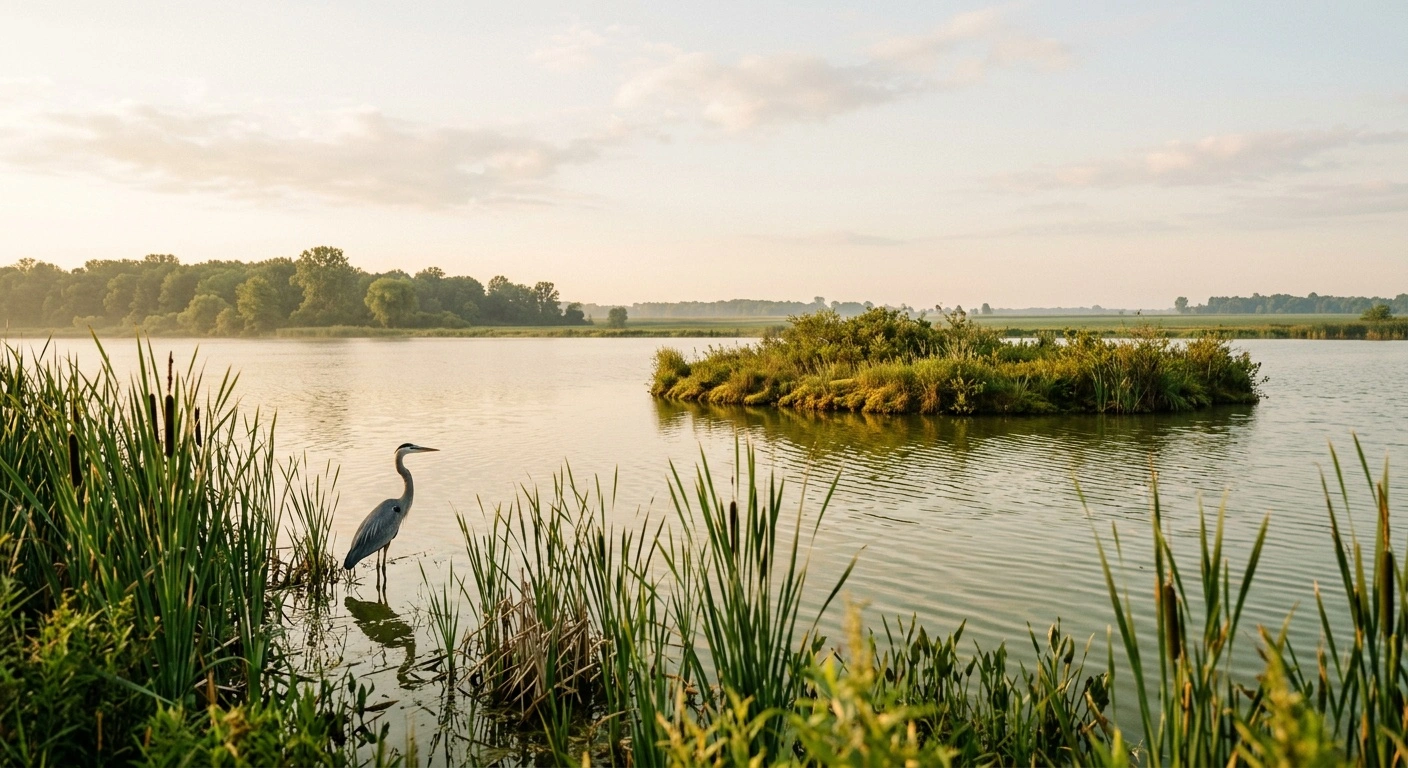
Buckeye Lake natural heritage begins with a landscape that people have changed for two centuries. Yet the area has never stopped supporting wildlife. The shallow, human-made reservoir covers roughly 3,100 acres and has about 35 miles of shoreline. A couple dozen small islands rise from its waters.
The lake often appears green or green-brown because wind easily stirs sediment from the bottom. It does not resemble a clear northern glacial lake. Its shallow water helps support cattail beds, fish and waterfowl. The same conditions also contribute to recurring water-quality problems.
This is not a story of untouched wilderness. Buckeye Lake began as a wetland, became a canal reservoir and later grew into a recreation destination. Today, a state park and several working communities surround it. Each period left physical and cultural traces, including a rare floating bog.
Buckeye Lake Natural Heritage Starts with the Great Swamp
Long before the lake existed, a broad wetland called the Great Swamp covered the area. Explorer Christopher Gist recorded it in 1751. Wet ground, shallow pools and dense vegetation extended across parts of present-day Licking, Fairfield and Perry counties.
Water once moved slowly through this low landscape. In 1826, Ohio began impounding the wetland as a feeder reservoir for the Ohio and Erie Canal. Canal boats needed a dependable water supply to cross the Licking Summit.
Flooding the swamp created a wide, shallow reservoir instead of a deep lake basin. That origin still shapes Buckeye Lake’s ecology. It explains the limited depth, easily disturbed sediment and marshy edges found around the lake.
From Canal Reservoir to Buckeye Lake State Park
The reservoir outlasted the canal system that led to its construction. Railroads gradually replaced canals, and recreation became the lake’s primary use. Ohio renamed the reservoir Buckeye Lake in 1894. Cottages, docks and gathering places soon spread along the shoreline.
Ohio established Buckeye Lake State Park in 1949, the same year it created the Ohio Department of Natural Resources. The designation recognized the lake as a public recreation and natural resource. It also brought boating access, habitat management and public safety under a statewide park system.
Buckeye Lake State Park does not have a single entrance gate. Visitors reach it through boat ramps, public shoreline areas, village streets and the open lake. This layout reflects a park closely connected to nearby communities.
A Shallow Lake Still Supports Wildlife
Buckeye Lake does not look like a remote forest lake. Houses, seawalls, boat lifts and roads occupy much of the shore. Motorboat traffic also increases sharply on warm summer weekends.
Even so, shallow water and sheltered edges continue to support plants, insects, fish and birds. Reedy banks and quiet coves provide valuable habitat where hardened shorelines have not replaced them. These areas also give young fish cover from predators.
Herons hunt in the shallows, while seasonal waterfowl rest and feed around the lake. Cattails and marsh grasses create cover where land meets water. The islands provide additional habitat, although vegetation and human use vary by location.
Buckeye Lake is not pristine. It remains ecologically active within a heavily developed central Ohio landscape.
Cranberry Bog Is the Lake’s Rarest Natural Feature
Cranberry Bog State Nature Preserve holds the most unusual part of the lake’s natural history. When workers flooded the Great Swamp, sphagnum bog vegetation broke free from the bottom. The mass floated upward and formed an island instead of remaining rooted in mineral soil.
Scientists consider Cranberry Bog an exceptionally rare example of a floating bog island. The federal government designated the preserve a National Natural Landmark in 1968. However, that status does not make it an open-access attraction.
The bog is fragile, unstable and gradually shrinking. ODNR normally closes it to general public access and requires specific authorization for entry. Visitors should never approach the island independently by boat or on foot.
These restrictions protect sensitive plants and unstable ground. They also safeguard a remnant ecosystem that managers could not recreate after serious damage.
Fishing Connects Ecology with Daily Lake Life
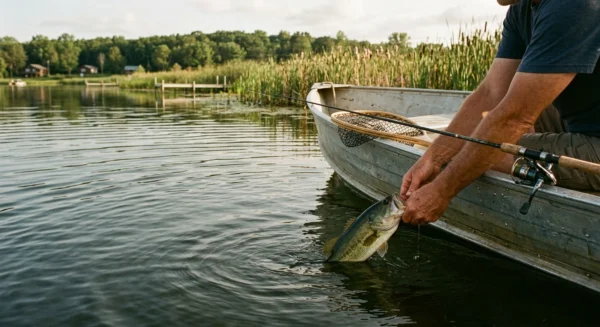
Fishing gives residents and visitors a direct connection to Buckeye Lake’s natural systems. Anglers commonly target saugeye, crappie, largemouth bass, bluegill and channel catfish. These warm-water species suit a shallow central Ohio reservoir.
Fish locations change with the season, water temperature, weather and available cover. Crappie and bluegill often gather near docks or shoreline structure. Saugeye may move into open water or feed in shallower areas during low-light periods.
Ohio generally requires anglers age 16 and older to carry a current fishing license, though exceptions apply. Regulations can change. Check statewide rules and lake-specific notices before fishing or keeping a catch.
Beginners can use a simple panfish rig from an authorized public shoreline or dock. Experienced anglers often cover open water and shoreline structure by boat. Everyone should respect private docks, marked areas and nearby anglers.
Public Access Makes the Lake Easier to Explore
Buckeye Lake lies about 30 miles east of Columbus near Interstate 70 and State Route 79. Newark, Lancaster and Zanesville are also within practical day-trip distance. The best route depends on which side of the lake you plan to visit.
North Shore Boat Ramp serves the village of Buckeye Lake. Liebs Island Boat Ramp provides access from Millersport, while Fairfield Beach Boat Ramp serves the southeastern shore. These locations distribute trailers and vehicles around the lake.
Ramp areas can fill quickly on warm weekends. Arrive early and prepare your boat before entering the launch lane. Confirm current ramp conditions, posted rules and applicable charges before towing to the lake.
Visitors without boats can use designated public shoreline areas in Buckeye Lake State Park. Access conditions differ by location. Watch for signs that mark private property or restrict parking.
Boating Adds Recreation and Pressure
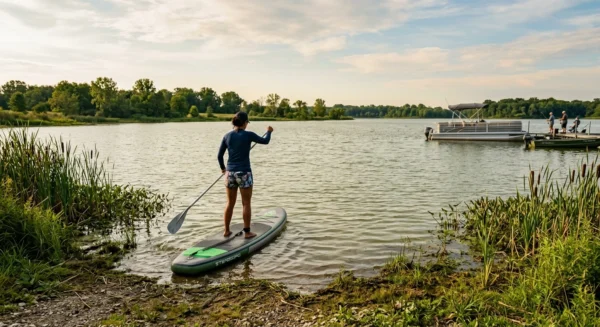
Pontoons, runabouts, fishing boats, kayaks and paddleboards share Buckeye Lake. Ohio designates the lake for unlimited horsepower. Paddlers and small-boat operators should expect larger wakes and faster traffic as the day grows busier.
Boaters must follow current Ohio registration, equipment and life-jacket rules. Review state guidance before launching if you do not know the requirements. Carrying the proper equipment protects passengers and reduces delays at the ramp.
Wakes can affect other boats, docks and vulnerable shoreline edges. Operate slowly and predictably near ramps, channels, anglers and paddlers. Keep a safe distance from people standing or fishing along the shore.
Carry out fishing line, bait containers and other trash. Discarded line can trap birds, turtles and other wildlife. Boaters must also avoid Cranberry Bog and follow every preserve restriction.
Water Quality Requires Ongoing Attention
A shallow reservoir responds quickly to wind, heat and runoff from its watershed. Wind stirs bottom sediment, which keeps the water naturally turbid. Nutrients from the surrounding watershed can also promote harmful algal blooms.
Conditions may change within days during warm weather. Last week’s water appearance does not confirm today’s safety. Check current ODNR and Ohio EPA information before swimming or planning other direct water contact.
Avoid water with surface scum, unusual discoloration or a strong odor. Keep children and pets away from affected areas. Follow all posted recreational advisories and closures.
An advisory may change the day’s plans, but it does not eliminate every way to visit. People can watch birds, use shoreline spaces or explore nearby communities without entering the water. Follow current guidance if you plan to fish during an advisory.
The Dam Project Changed the Modern Lake
Buckeye Lake’s ecosystem and recreation economy depend on infrastructure that maintains a managed water level. In 2015, state officials identified severe safety concerns with the earthen dam. Managers lowered the lake while crews completed a replacement project.
The extended drawdown reduced boating access and exposed broad sections of lakebed. It also caused financial strain for local businesses that depended on lake traffic. Residents lived with construction and reduced water levels for several years.
Crews completed the replacement, and managers restored normal lake levels. The project demonstrated that a human-made lake requires dependable infrastructure as well as habitat protection. Today’s boating activity can make the drawdown seem distant, but it remains part of the lake’s recent history.
Recreation Has Shaped the Shore for Generations
Buckeye Lake’s heritage includes cultural history as well as ecology. Buckeye Lake Amusement Park made the area a major regional recreation destination. During the 1940s and 1950s, its venues hosted popular big-band performers.
The amusement park closed in 1970, but local memories of that era remain strong. Those years reinforced the lake’s identity as an accessible getaway rather than a remote preserve. They also influenced later shoreline development.
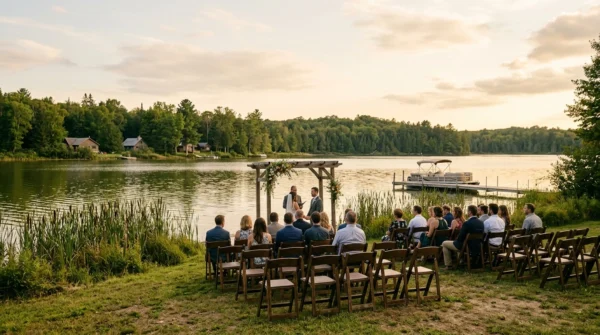
Today, cottages, year-round homes, docks and small communities ring the water. Buckeye Lake, Millersport, Thornville, Hebron and Fairfield Beach each have a different relationship with the lake. None operates like a private resort community.
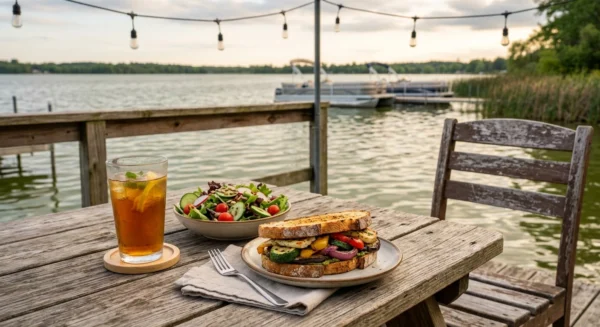
Residents fish before work, maintain weather-exposed properties and gather near the water. Visitors trailer boats in for a few hours or spend the day along the shore. This lived-in character belongs to the lake’s history and present identity.
Seasonal Changes Affect Every Visit
Spring brings renewed activity to ramps and docks. Anglers follow seasonal fish movements, while shoreline plants begin growing again. Birds are often easier to observe before summer boat traffic reaches its peak.
Summer is the busiest season, especially on warm Saturdays. Parking fills earlier, and wakes spread across open water. Early mornings usually offer calmer conditions for fishing, paddling and wildlife watching.
September weekdays can feel much quieter. Cooler temperatures reduce boat traffic and leave more space at access points. Fall also brings changing shoreline color and renewed interest in fishing.
Winter slows activity around the lake, and some businesses reduce their hours. Ice thickness can vary widely on a shallow reservoir. Never assume the surface is safe without current information from an authoritative local source.
Practical Ways to Protect Buckeye Lake Natural Heritage
Visitors can reduce their impact without specialized equipment or training. Follow posted navigation and no-wake rules. Avoid cutting through reeds, and give feeding or nesting birds plenty of room.
Place used fishing line in a secure trash or recycling container. Never release unused bait, aquarium plants or other organisms into the lake. Clean boats, trailers and paddling equipment before moving between waterways.
Use established access points instead of crossing private land or pushing through shoreline vegetation. Respect all Cranberry Bog permit restrictions, even if the island looks easy to reach. The floating surface and sensitive plant community make unauthorized access dangerous and damaging.
Check fishing regulations, boating requirements and water advisories before each trip. Conditions and rules can change during the season. Small choices matter where homes, recreation and wildlife habitat sit close together.
A Natural Legacy Shaped by Change
Buckeye Lake’s value comes from its complicated history. The Great Swamp became canal infrastructure, a recreation center and eventually a state park. Several communities now treat the lake as both a public resource and a home landscape.
Cranberry Bog preserves a fragment of the original wetland. Meanwhile, the reservoir supports fishing, boating and wildlife in a heavily altered setting. Its history records the interaction between water, engineering, recreation and community life.
Water-quality work, habitat protection and dam maintenance continue to shape the lake. So do the daily decisions of anglers, boaters, residents and shoreline visitors. Responsible use helps preserve access while limiting avoidable harm.
A visit can be simple. Watch the water from shore, launch a fishing boat at Liebs Island or paddle early from an authorized access point. Buckeye Lake remains shallow, busy and ecologically imperfect, yet it holds an important place in central Ohio’s natural identity.